
>Clothing > Music&Dance >Crafts >Architecture >Calligraphie and Arts
There is no standardised Omani cuisine. As the barren Omani soil has not exactly contributed to a variety of dishes, the country's cuisine has long been characterised by foreign products, which contribute to a diverse national cuisine.
In the past, people in the interior of the country relied mainly on dates, limes, rice and bread, while the coastal population enriched their diet with fish. Today, refrigerated transports supply even remote regions with fresh fish and vegetables on a daily basis.
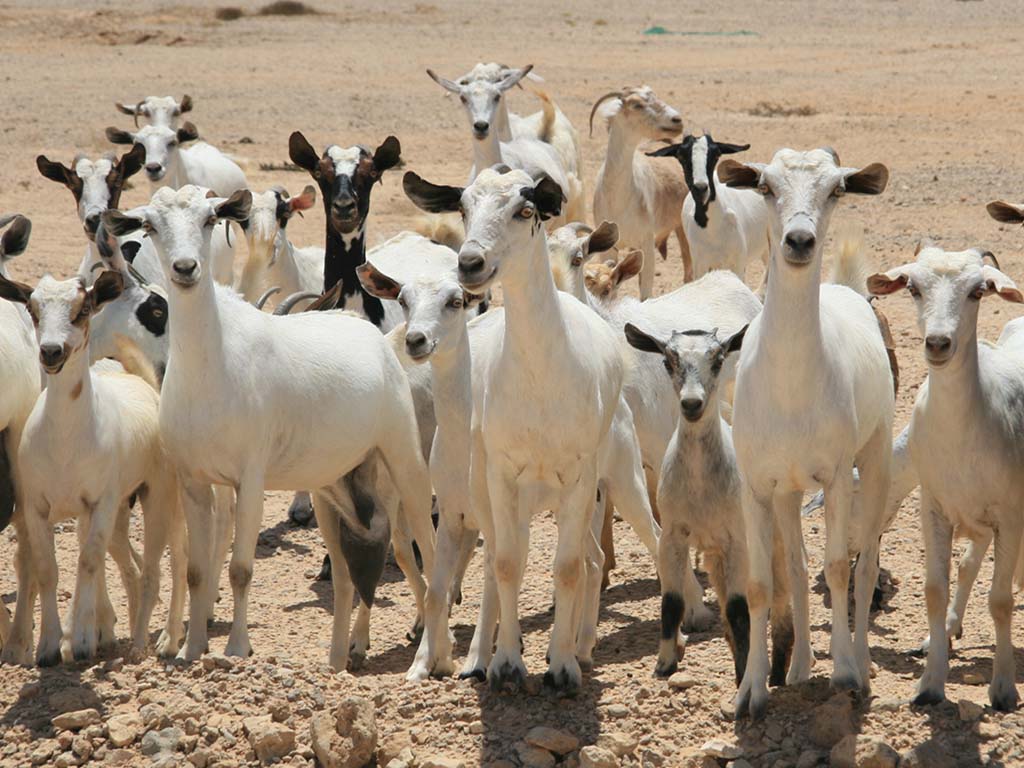
The meat on offer is varied: goats, chickens, lambs and even camels enrich the menu. However, the latter are only slaughtered on festive occasions or on religious holidays.
Many spices come from Asia and Africa: Cinnamon, cardamom (also for tea or coffee), saffron, turmeric (turmeric), cloves and rose water. Nevertheless, there are also some typical local dishes, such as shoowa or halwa.
As in other Arab countries, it is customary in Oman not to eat with cutlery, but with the right hand. Great attention is paid to hygiene. If there is no running water nearby, guests are given a bowl of water to clean their right hand. Cutlery can always be asked for in restaurants.
The time-consuming holiday dish Shoowa consists mainly of goat meat, served with rice, salad and limes.
This dish is only prepared on special religious holidays, as it is very time-consuming. A goat is seasoned and wrapped in banana leaves and placed in a pit of earth on glowing charcoal, then the pit is closed again. Depending on the size of the animal, it is only opened again after 12 to 24 hours. The meat is then tender and juicy. It is served on a large tray with lots of rice, salad and limes. This is followed by lots of fruit and the obligatory coffee to finish.
The different varieties of Halwa not only differ greatly from one another in terms of flavour, but also in terms of price.
In Arabic, "halwa" means süß, and that's exactly how it tastes. No wonder, as the ingredients consist of clarified butter, caramelised sugar, almonds and starch, flavoured with saffron, cardamom, almonds and rose water. You can still find a halwa cook here and there in smaller towns, but there is a large factory in Barka. It produces a wide range of varieties that vary greatly in price, colour and taste. The thick mass is cooked for hours over a wood fire (which is important for the flavour) in a large copper kettle, stirring constantly, until it is finally poured into colourful plastic or enamel bowls. Then just leave to cool and: Enjoy your meal!



Your contacts for travelling with Arabia Felix:
Maria Popp and Karin Nowack
Phone: +49 (0)89 / 30 77 92 00
info@oman.de
ARABIA FELIX Synform GmbH
Treffauerstraße 18
81373 München
Germany
Tel: +49 89/30779200
E-Mail: info@oman.de
VAT-ID: DE201885274