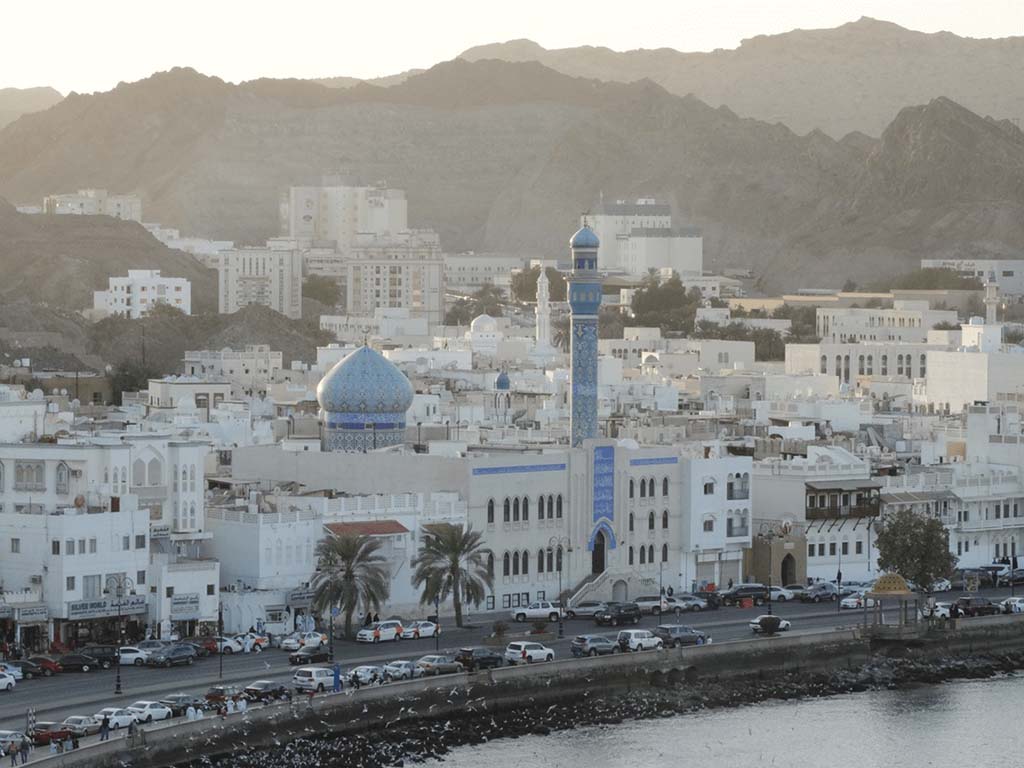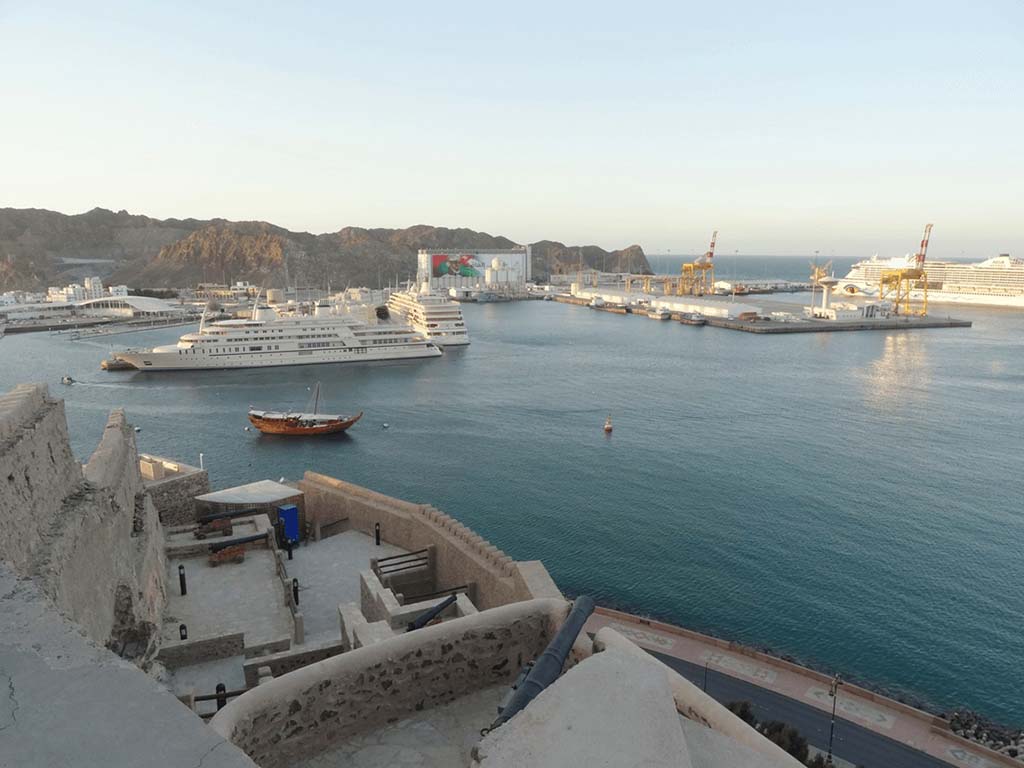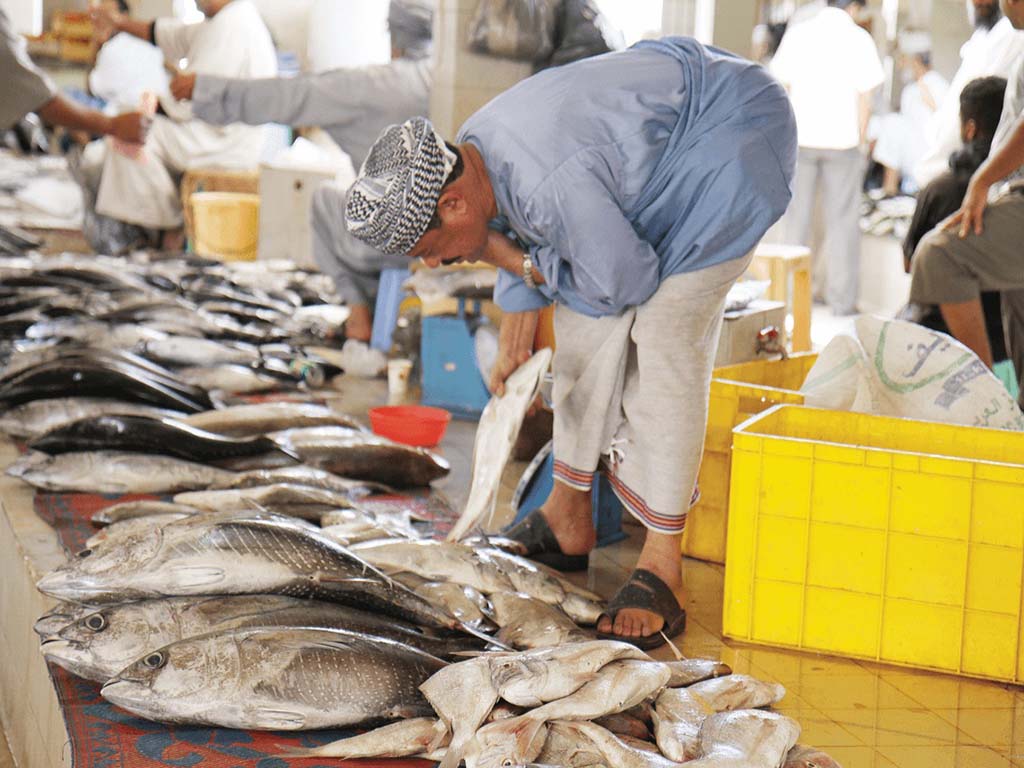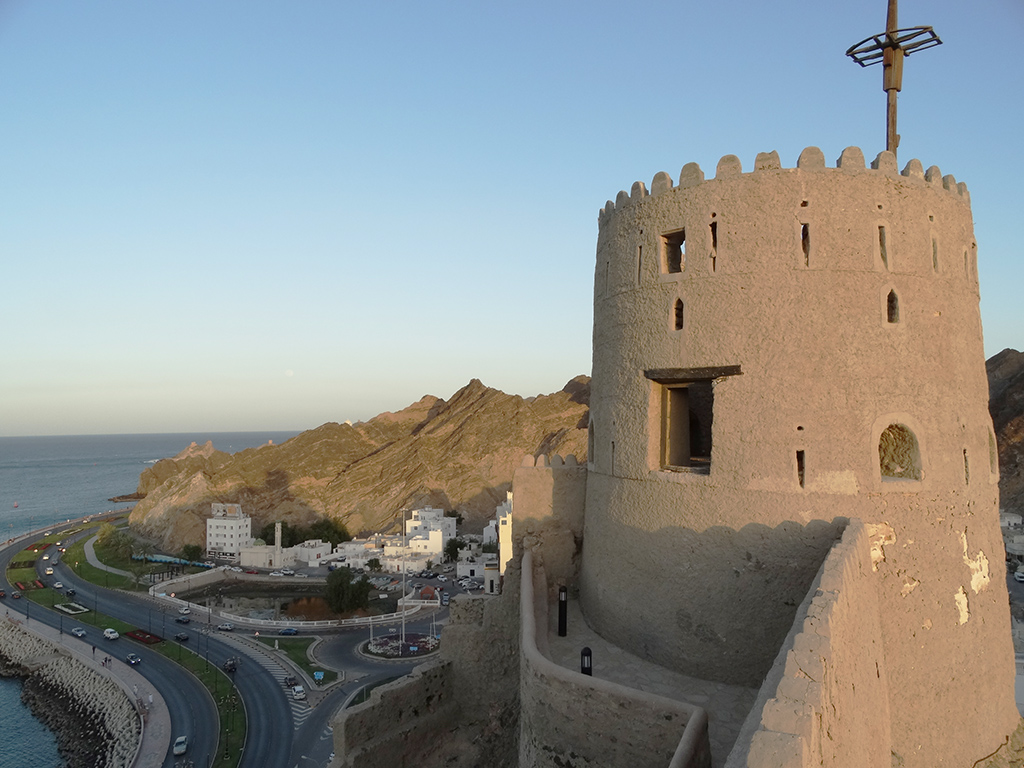
By 1900, Muttrah had already developed into a lively trading centre, protected from the interior by defences and walls. After 1970, the large harbour of Mina Qabus and a new fish market were built. Every morning, the fishermen moor their boats directly at the market and sell their rich, colourful catch here. The colourful hustle and bustle continues at the adjacent vegetable market.
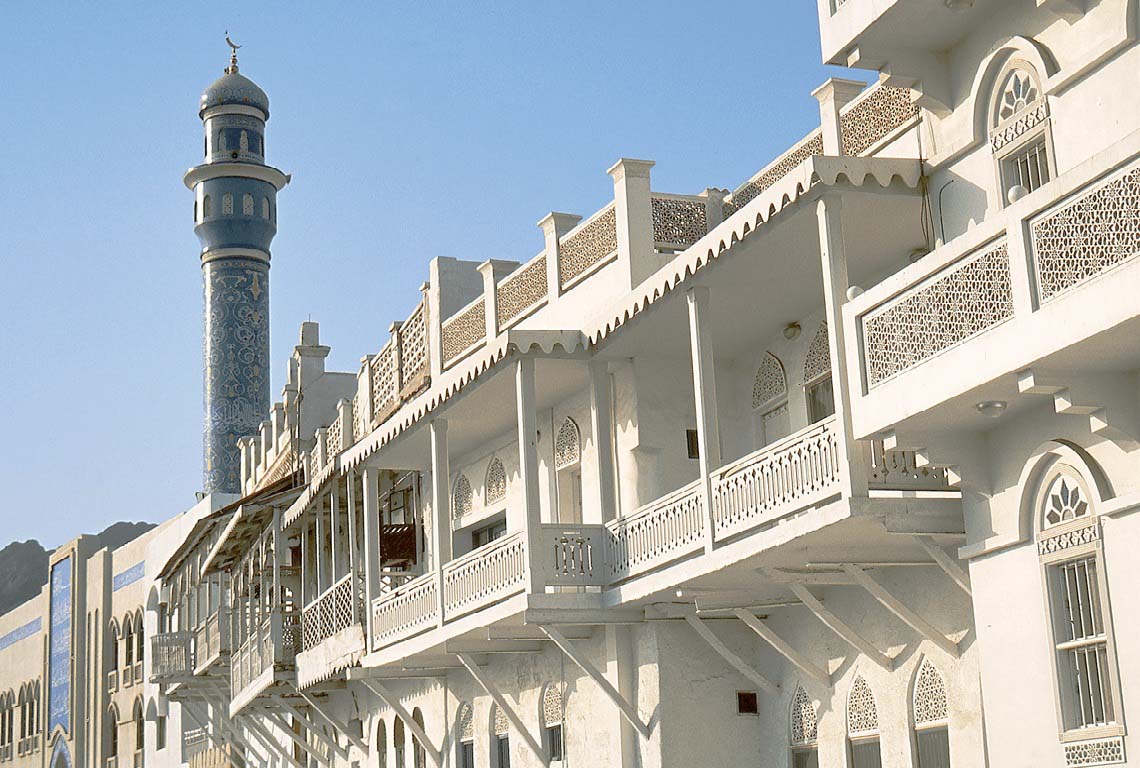
Directly on the coastline, in the south-west arch of the bay, stately 19th century houses have been preserved. They form the harbour front of the Sur al-Lawatiya district, which is inhabited by the Shiite religious community of the Khodjas. The Khodjas, who originate from Pakistan, are still among the most successful traders in Oman today.This neighbourhood is adjoined to the east by the Muttrah souq, the largest in the country. It is now one of the most important tourist attractions. Although the building fabric is new, hardly any other shopping district still exudes as much old-fashioned oriental merchant spirit as this one. In the Souq you will encounter the most incredible contrasts. Modernity and times thought to be long gone exist side by side here.
The Bait Al Baranda Museum, housed in one of the oldest houses, the Bait Al Ghaliya art gallery with local history museum and the small Muttrah Fort, from where you have a wonderful view over the harbour bay, are well worth a visit.
➤ More pictures from the Muscat capital region
➤Hotels in the Muscat Capital Area


Your contacts for travelling with Arabia Felix:
Maria Popp and Karin Nowack
Phone: +49 (0)89 / 30 77 92 00
info@oman.de
ARABIA FELIX Synform GmbH
Treffauerstraße 18
81373 München
Germany
Tel: +49 89/30779200
E-Mail: info@oman.de
VAT-ID: DE201885274