
The western Hadjar Mountains are rich in prehistoric artefacts, most of which date back to the 3rd millennium BC. Of the highest scientific importance is undoubtedly a settlement with a necropolis discovered in the 1970s north of Baat: the largest site known to date from the Umm al-Nar period (2500 - 1800 BC).
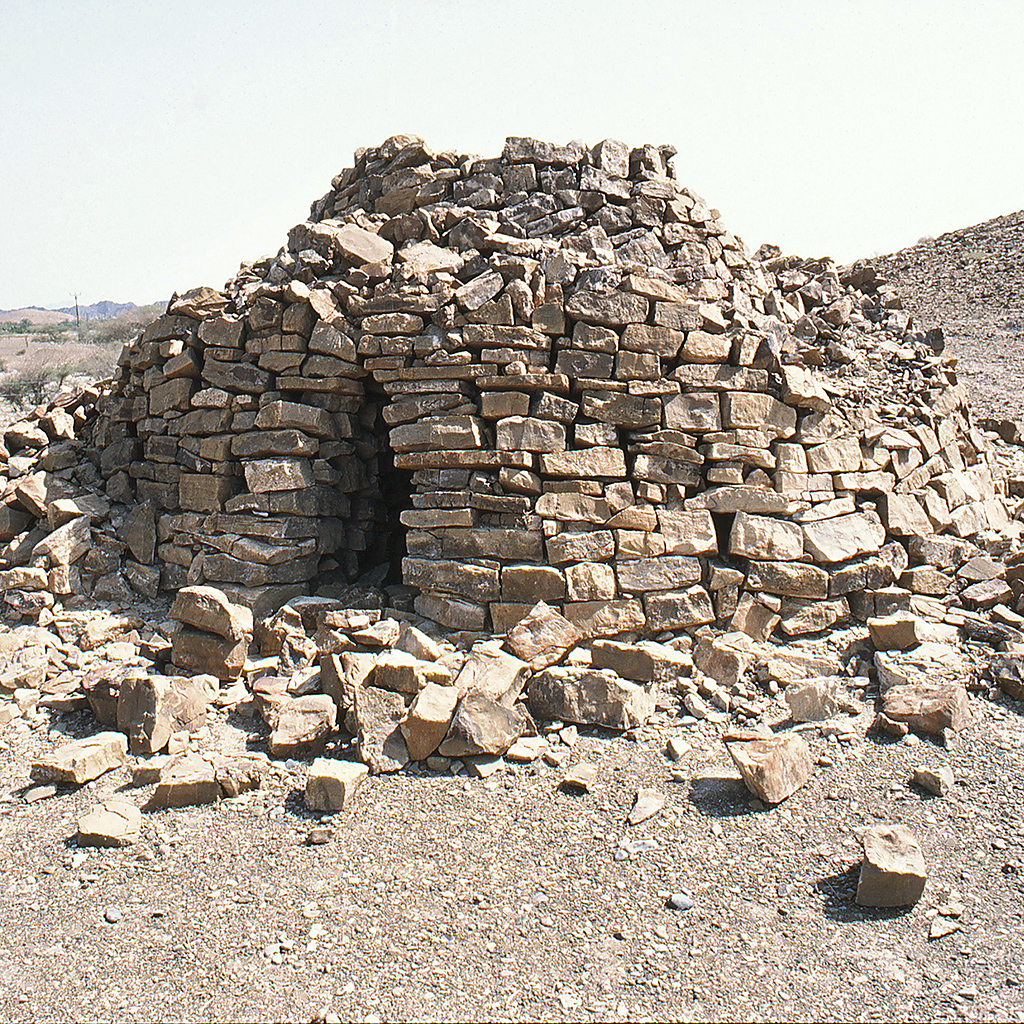
The settlement includes a series of so-called beehive tombs. They have since been recognised by UNESCO as a World Heritage Site.
In addition to these tombs, tower foundations with a diameter of up to 15 metres were also found here. However, their exact function has not been clarified, but it is assumed that the buildings, which were originally up to ten metres high, were refuge castles.
The beehive tombs near Al Ain, about 25 kilometres east of Baat, north of the village of Amla, are picturesquely situated on a hill near the oasis of Al Ain, against the spectacular backdrop of Jebel Misht. There is no clear evidence that the buildings, commonly referred to as beehive tombs, are actually necropolises. The term became established because their shape and appearance are reminiscent of tombs found in what is now the UAE.
► One of the beehive tombs of Baat was reconstructed in the National Museum in Muscat, which opened in 2017.



Your contacts for travelling with Arabia Felix:
Maria Popp and Karin Nowack
Phone: +49 (0)89 / 30 77 92 00
info@oman.de
ARABIA FELIX Synform GmbH
Treffauerstraße 18
81373 München
Germany
Tel: +49 89/30779200
E-Mail: info@oman.de
VAT-ID: DE201885274