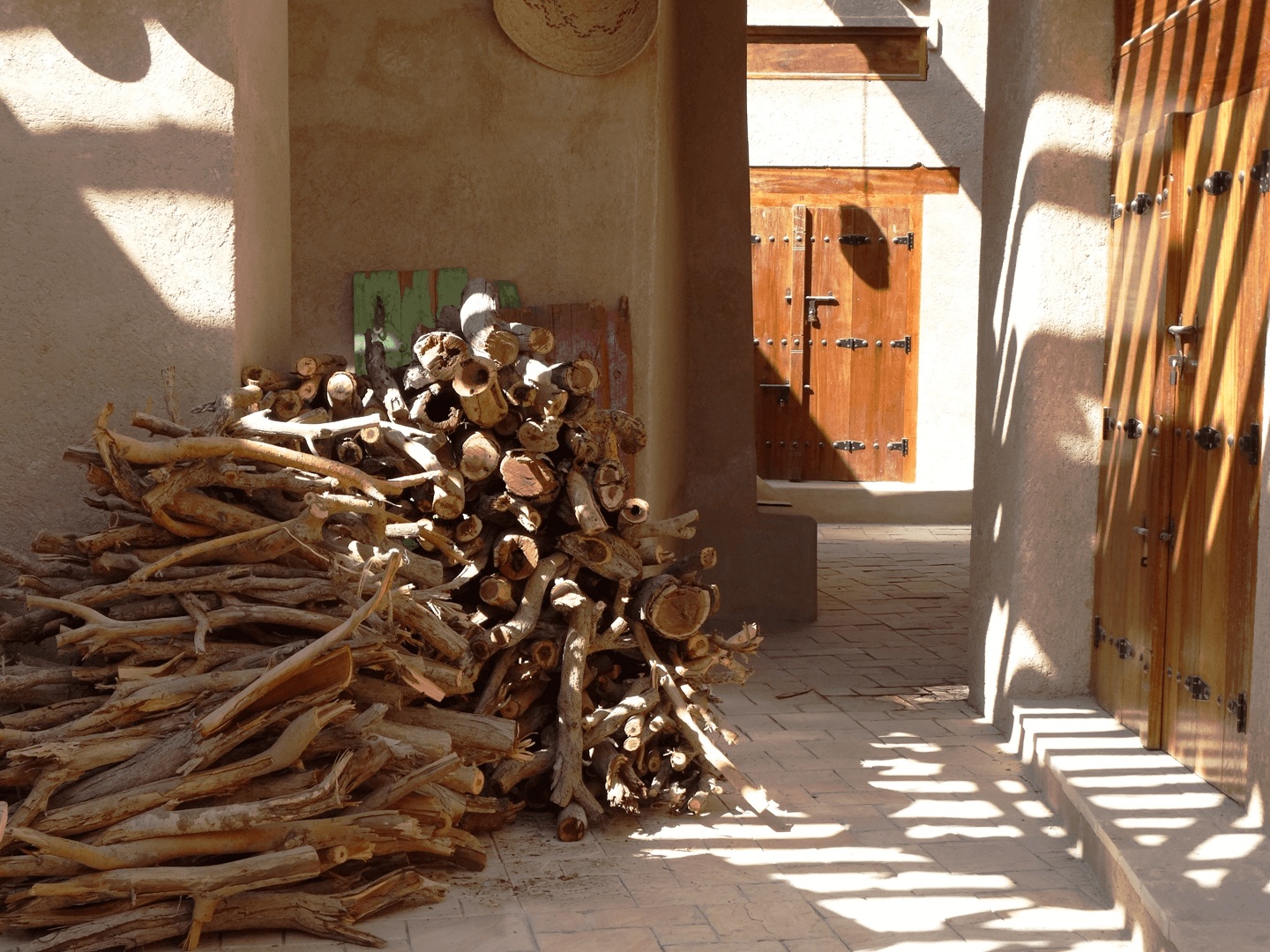
There are large deposits of clay in the Bahla Oasis region. The fact that this important ancient raw material has always been available here in abundance is obvious everywhere. In contrast to the other oasis towns in Oman, in Bahla not only the settlement itself was secured with large clay walls, but also the entire oasis area in the wadi.
A fortification wall up to five metres high and over ten kilometres long with numerous built-in watchtowers surrounds the extensive date gardens and fields, winding its way through the mountains on the edge of the wadi and the depths of the riverbed. Some sections have been restored and are accessible.
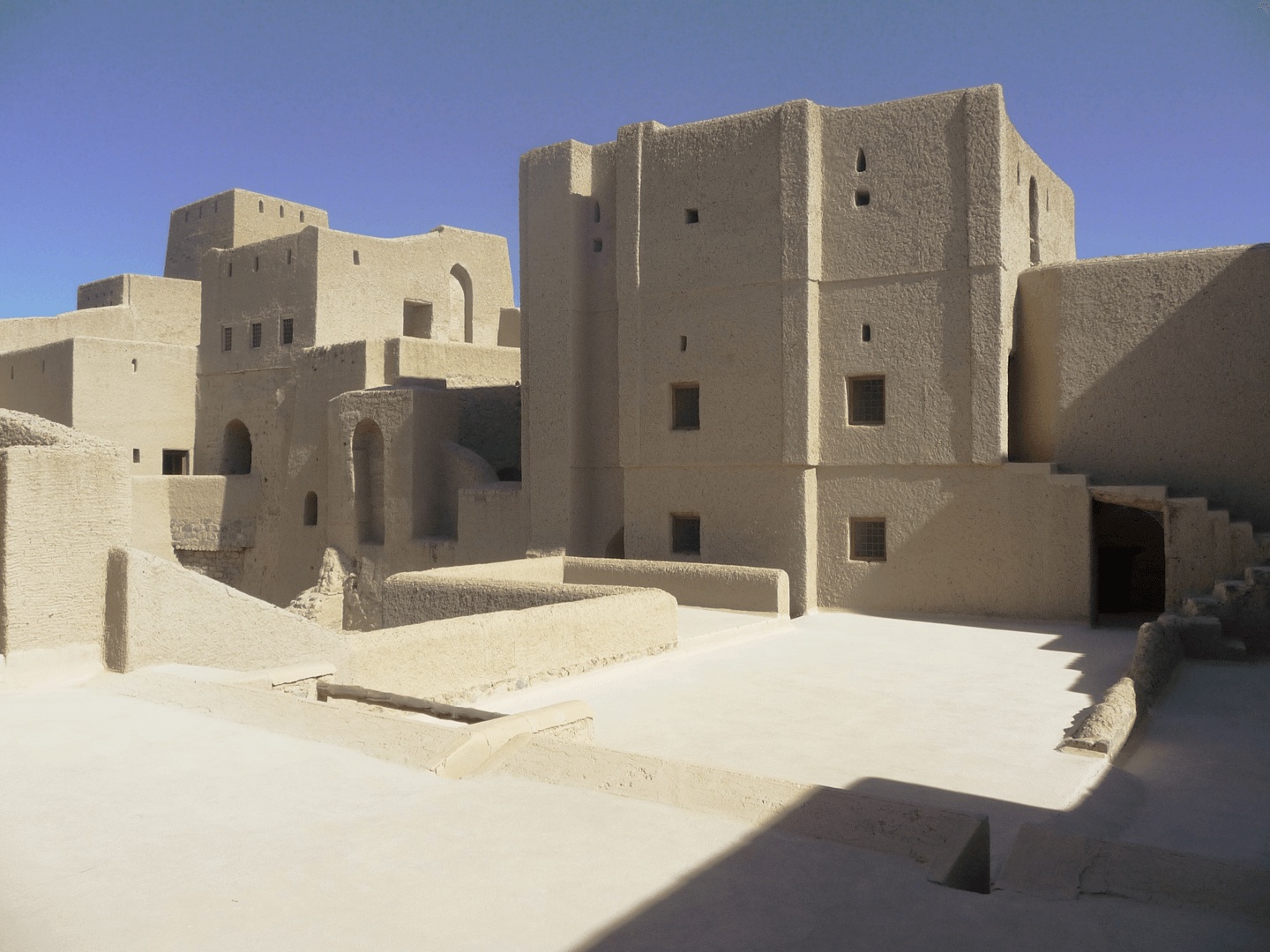
In the east of the oasis, the ruins of the Hisn Tama fortress rise on a hill, another masterpiece of clay architecture, named after the alleged builder of the gigantic complex, a 17th-century Nabhani tribal chief.
The fortress is certainly not only the largest example of mud architecture in Oman, but also one of the most impressive of its kind. Bahla Castle has been on the UNESCO World Heritage List since 1987. It was extensively and painstakingly restored in the old adobe style over many years and is now open to the public as a museum. It towers impressively over the oasis, visible from the south for miles around.
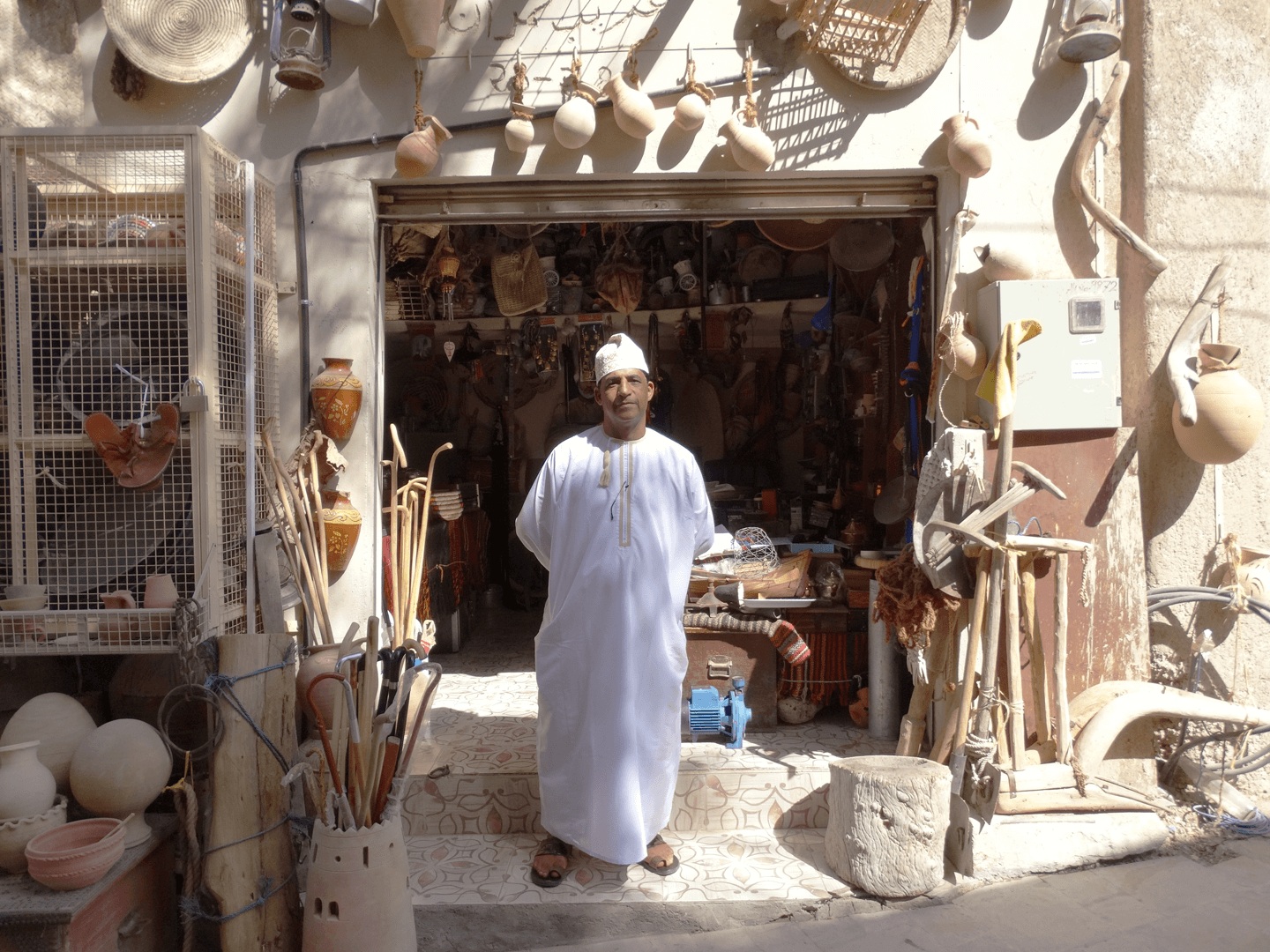
On the other side of the road, opposite the fortress, are the new and, to the east, the old souq of Bahla. A narrow track starts here, leading into the oasis and to the famous potteries.
➤ More pictures of the western Hajar mountain region



Your contacts for travelling with Arabia Felix:
Maria Popp and Karin Nowack
Phone: +49 (0)89 / 30 77 92 00
info@oman.de
ARABIA FELIX Synform GmbH
Treffauerstraße 18
81373 München
Germany
Tel: +49 89/30779200
E-Mail: info@oman.de
VAT-ID: DE201885274