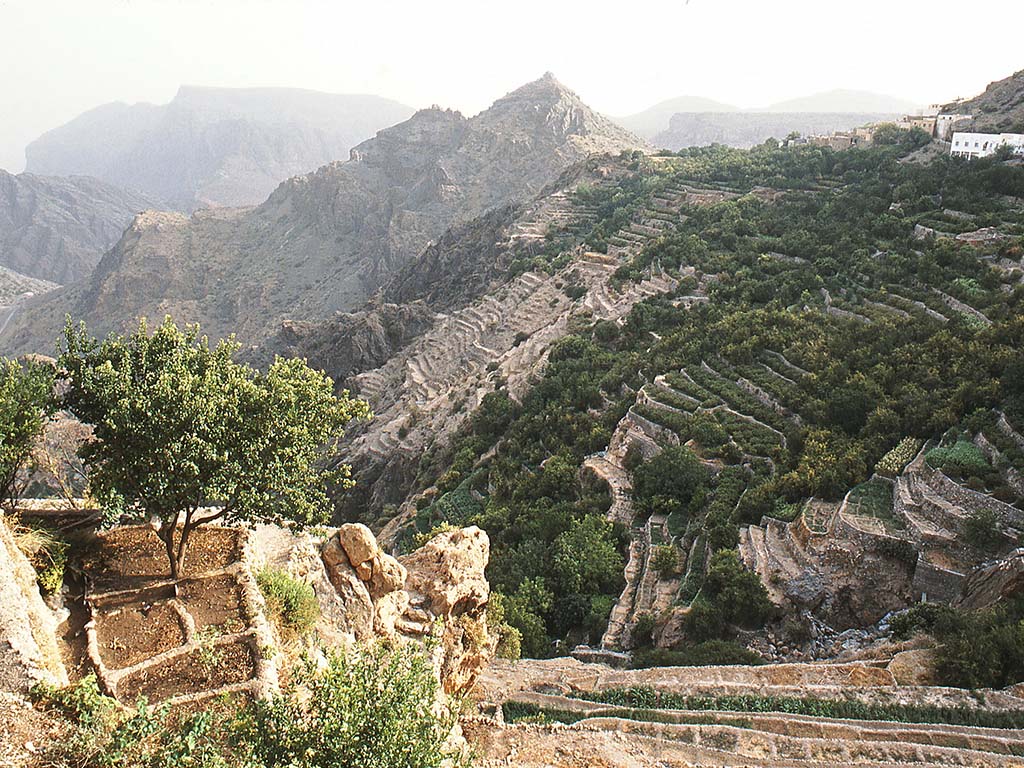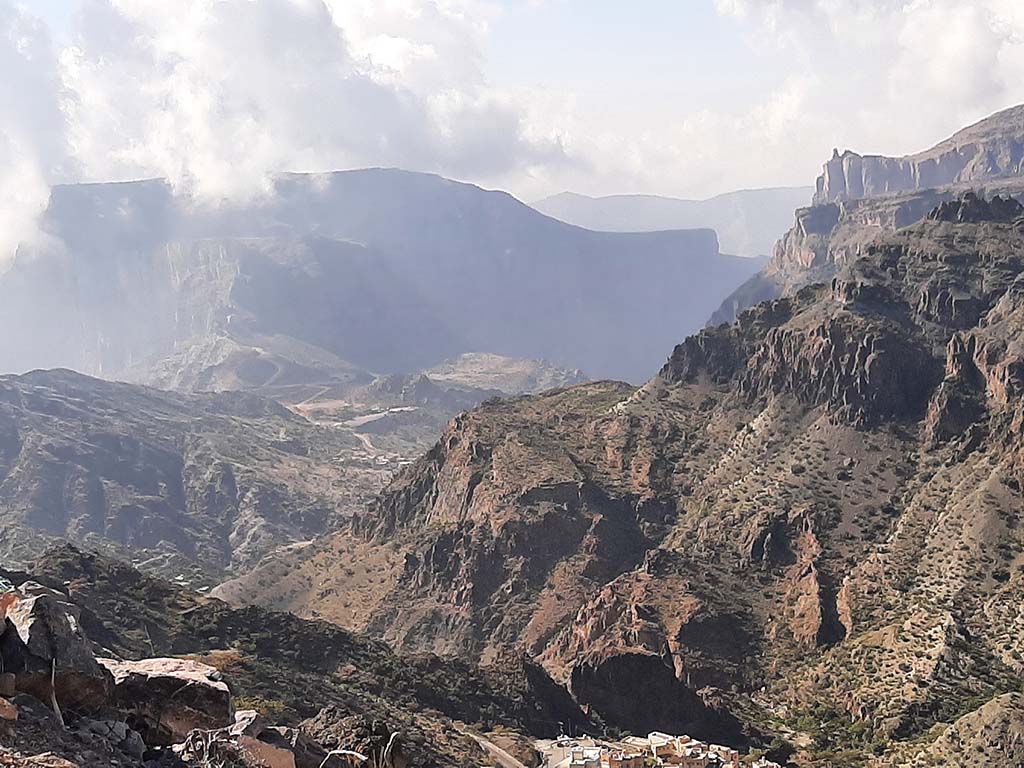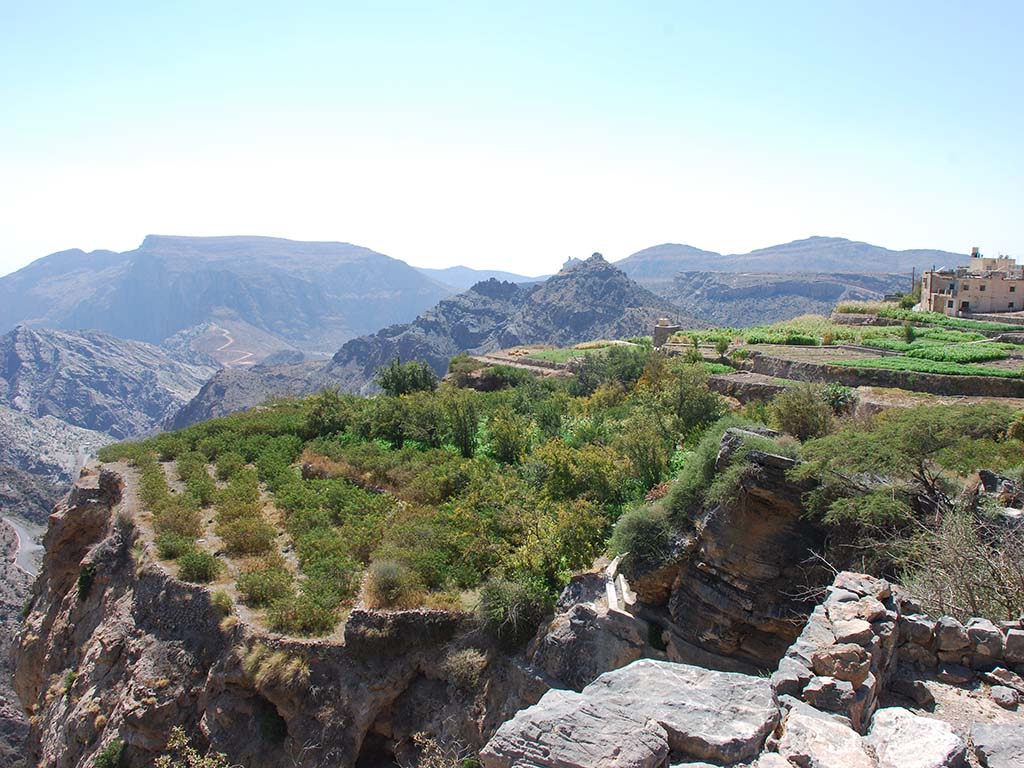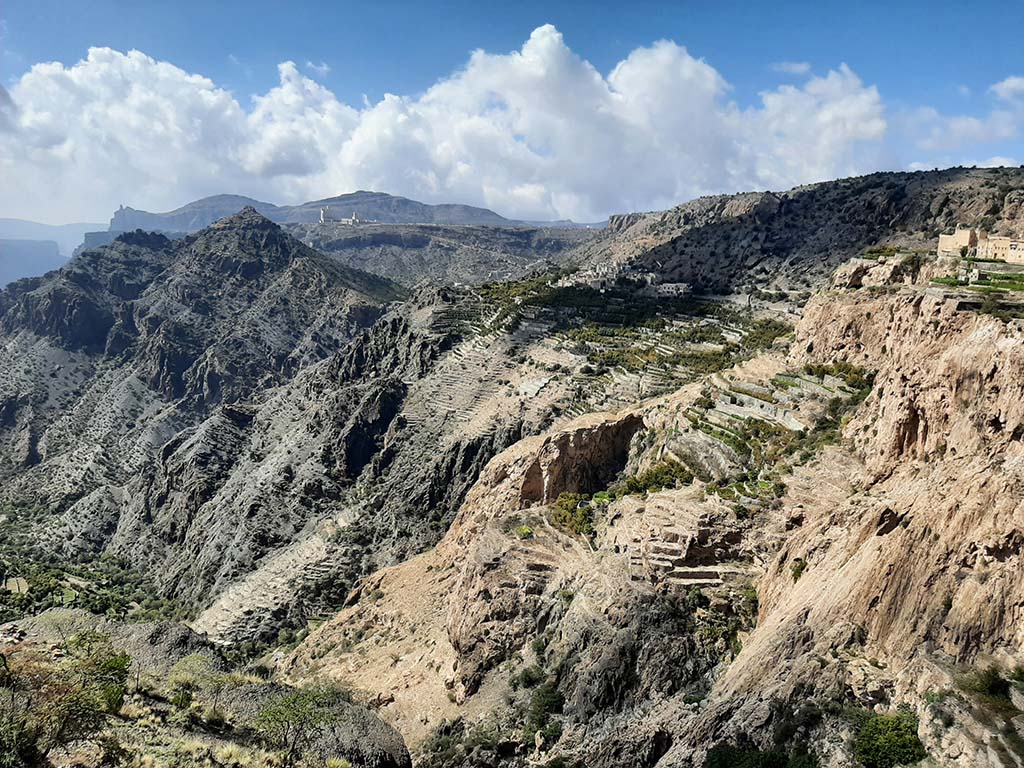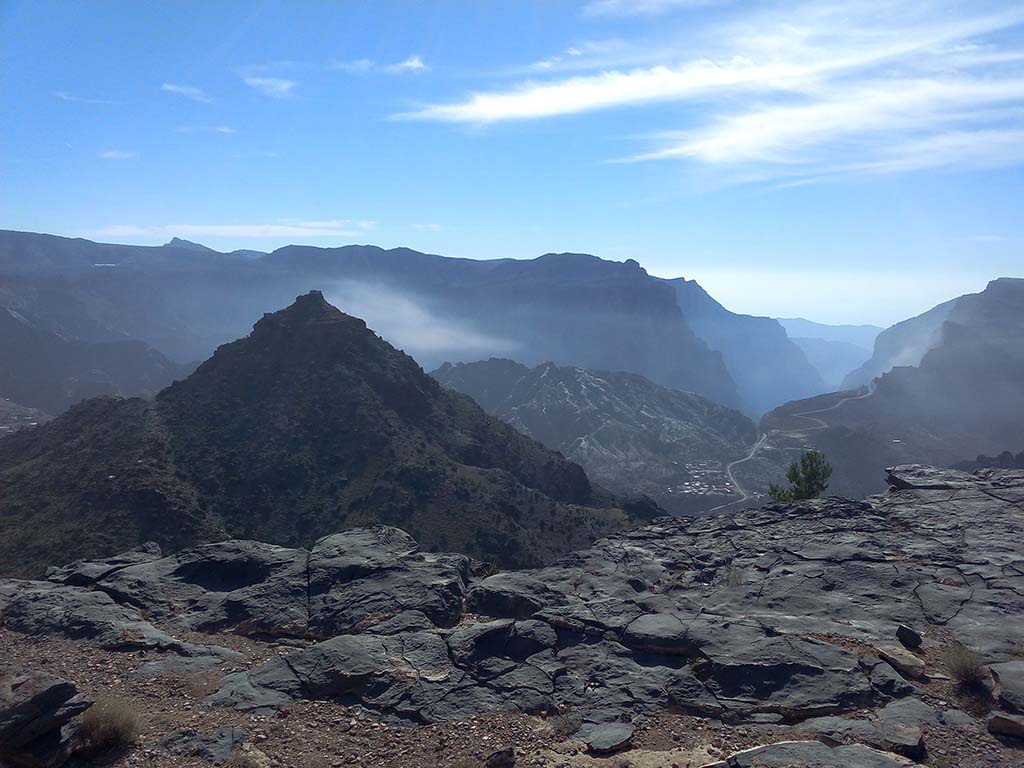
In the heat of the Omani summer, the climate on Jebel Akhdar is pleasantly Mediterranean. Accordingly, grapes, peaches and pomegranates thrive in the gardens. However, the region is particularly famous for its ancient rose bushes, from whose blossoms rose water is distilled in May.
Until a few years ago, access to Jebel Akhdar, the ›Green Mountain‹, was not permitted for foreigners and Omanis who did not live there. However, since living conditions and infrastructure in the villages of the Saiq Plateau, which is 2000 metres above sea level, have improved, this region has also been increasingly opened up to visitors. The road from Birkat al-Mauz up the mountain is now paved throughout, but the police post at the foot of the mountain makes sure that only off-road vehicles are allowed to use it.
Those visiting this region in winter should bring warm clothing - it can even snow. In the heat of the Omani summer, however, the climate up here is pleasantly Mediterranean. Accordingly, grapes, peaches and pomegranates thrive in the gardens, fruit that cannot be found anywhere else in the country. However, the region is particularly famous for its ancient rose bushes, from whose blossoms rose water is distilled in May.
A hike through the terraced fields on the narrow walls of the Aflaj is certainly an unforgettable experience. It offers fantastic views of the surrounding mountains and informative insights into the life of the people in this remote region. However, these hikes should only be undertaken with a local guide if possible. He not only knows the people who live there, but also the paths through the steep slopes along often deep precipices. Strangers are also expected to dress discreetly and to return greetings when offered.
➤ More pictures of the western Hajar mountain region



Your contacts for travelling with Arabia Felix:
Maria Popp and Karin Nowack
Phone: +49 (0)89 / 30 77 92 00
info@oman.de
ARABIA FELIX Synform GmbH
Treffauerstraße 18
81373 München
Germany
Tel: +49 89/30779200
E-Mail: info@oman.de
VAT-ID: DE201885274